The Physics Behind Space-Based Data Centre Cooling
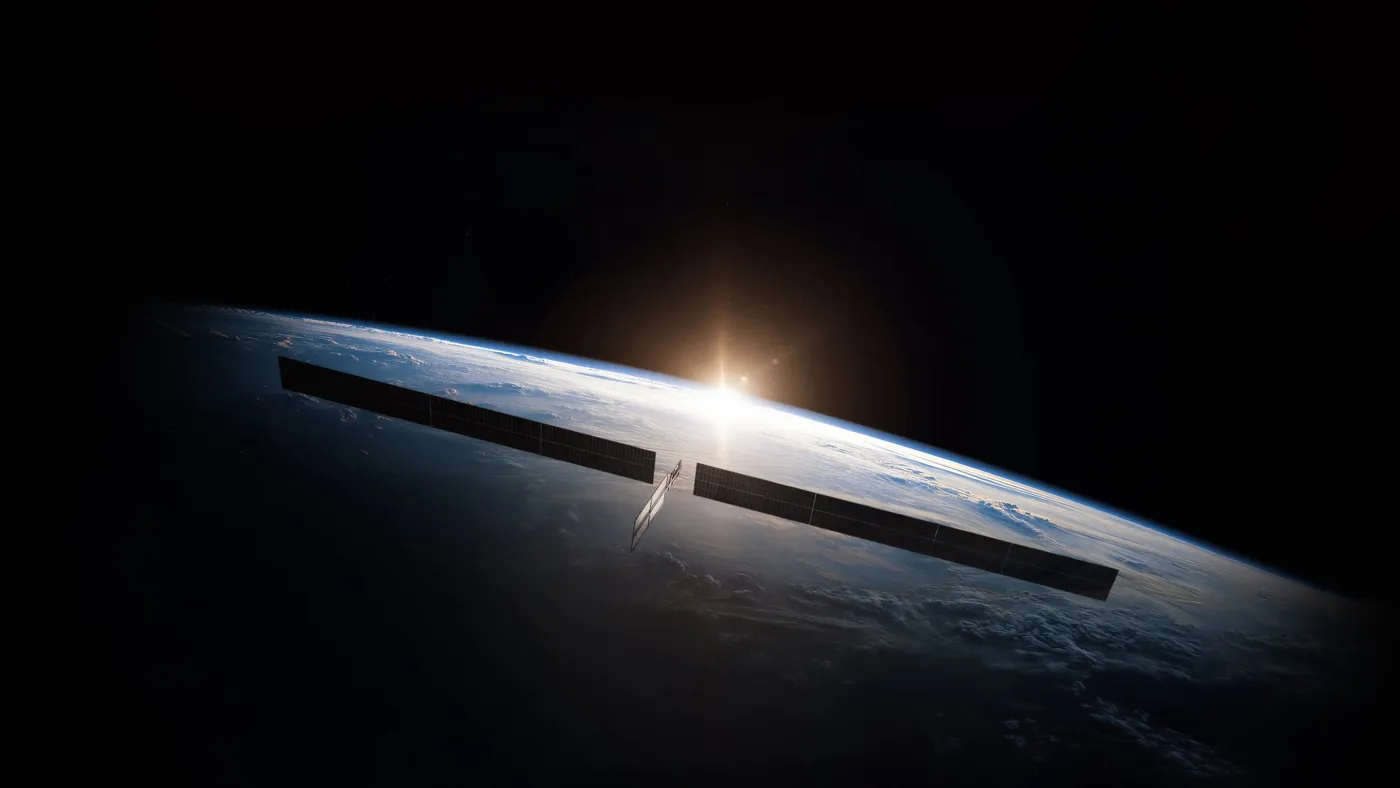
On Earth, cooling AI chips means pushing heat into air or water with fans, pumps, and chillers. In space there is no air or water, so that route is closed. Critics correctly note that a vacuum is an excellent insulator for conduction and convection. They miss the remaining exit: radiation.
Any warm object glows in infrared. The hotter it is, the more intensely it glows. The Stefan-Boltzmann law says the power radiated grows with the fourth power of absolute temperature. A panel at roughly 65 °C dumps about twice as much heat as one at 10 °C. Deep space sits near 3 K (−270 °C) and returns almost no heat, so the radiator faces a near-perfect cold sink.
A practical aluminium radiator panel, edge-on to the Sun and radiating from both sides, can reject roughly 1,300 W per square metre. Solar panels in orbit deliver about 250 W of electricity per square metre. Because every watt of electricity eventually becomes heat in the chips, the radiator only has to handle that electrical power. One square metre of radiator can therefore dispose of about five times the electricity produced by one square metre of solar panel. The cooling system ends up smaller than the power system.
A simple fluid loop carries heat from the chips to the radiator panels and returns; redundant pumps and debris shielding are the main hardware. No giant cooling towers or constant water make-up are required. The same physics that makes a thermos keep coffee hot is simply inverted: the panels are coated to maximise, not minimise, infrared emission.
Hotter chips make the radiator even smaller, so in orbit a hot chip is an advantage rather than a problem. That is the core reason space-based AI cooling is physically straightforward once the radiation path is used on purpose.